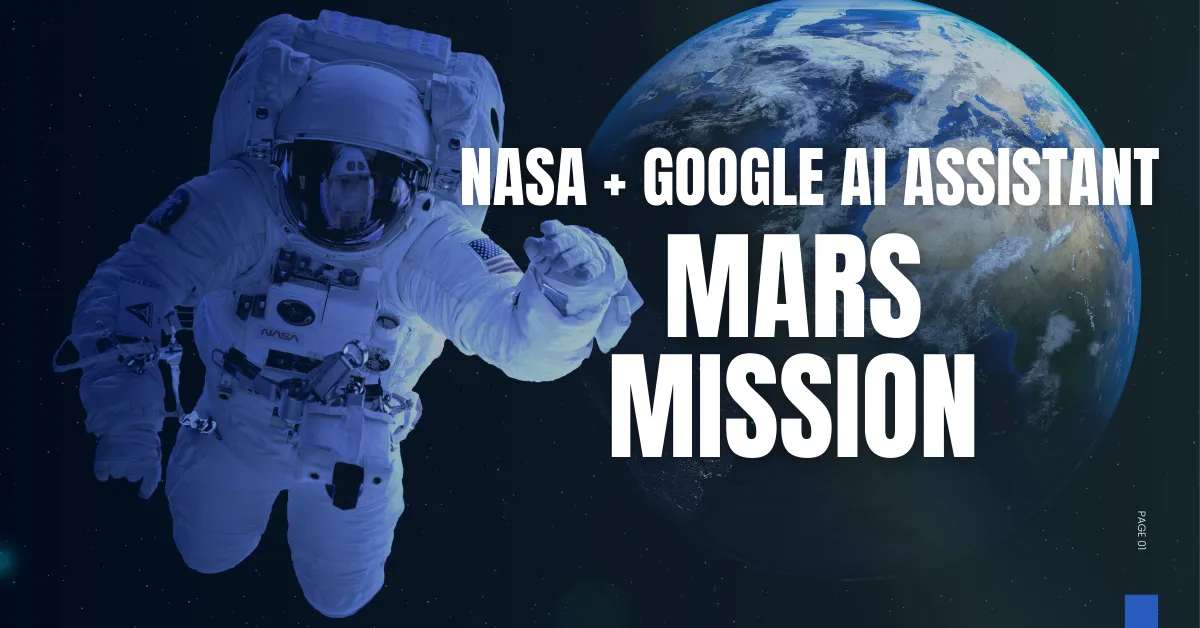
NASA & Google Join Forces on AI Medical Assistant for Mars Missions
NASA and Google team up to launch an AI medical assistant for deep-space missions like Mars. Discover how it could transform astronaut healthcare and remote medicine on Earth.

NASA and Google are talking healthcare to new frontiers. Literally! The two giants are teaming up to give astronauts a high-tech health boost.
The duo’s creation, the Crew Medical Officer Digital Assistant (CMO-DA), is an AI-powered tool designed to diagnose and treat illnesses far (millions of miles away) from Earth.
It’s another example of how AI benefits in healthcare are pushing boundaries beyond hospitals and into deep space.
Life on the International Space Station is relatively easy, where space crews can call doctors and get supply drops before returning home (to Earth) after several months.
However, a Mars voyage rewrites everything.
Communication delays could stretch to 24 minutes, and astronauts may be away for years (without a direct lifeline). Imagine falling ill, and calling a doctor back on Earth will take an astronaut over 20 precious minutes just to utter a phrase.
Enter CMO-DA. NASA and Google designed this tool to keep astronauts in deep-space missions (like Mars) healthy and self-sufficient. It operates almost like OpenAI’s autonomously functioning AI agent for medical care.
CMO-DA runs on Google Cloud’s Vertex AI system, allowing it to accept and process voice, text, and image inputs. Astronauts on long-haul, deep-space missions can describe symptoms and upload photos (of their physical manifestations). In turn, CMO-DA sends them AI-powered assessments without ever requiring a real (or live) doctor.
Early trials are promising. CMO-DA successfully handled simulated cases, like ankle injuries, ear pain, and even flank pain (with accuracy rates hitting 88%, 80%, and 74%, respectively).
NASA plans to make CMO-DA even smarter. Future upgrades could tap into onboard medical sensors and spot space-specific health issues. The partnership arrangement sees Google handling the infrastructure, while NASA oversees everything else (including code ownership and continuously training the AI).
CMO-DA’s benefits aren’t just for space. This technological breakthrough could bring expert health and medical care to the remotest areas on Earth. It proves that space innovation improves life down here, too.
Keep reading
More from the blog on the same topic.
Google Launches Experimental App for Running AI Models Offline on Phones
In a quiet but significant move, Google has released a new app that enables users to run a variety of open-source AI models directly on their smartphones without requiring them to connect to the internet.
Google Unveils “Nano Banana” Upgrade for Gemini’s Image Editing (Now Live for ALL Users)
Google has unveiled its latest breakthrough in AI image editing with “Nano Banana.” It’s a welcome upgrade inside the tech giant’s Gemini app, promising sharper realism and more creative flexibility.
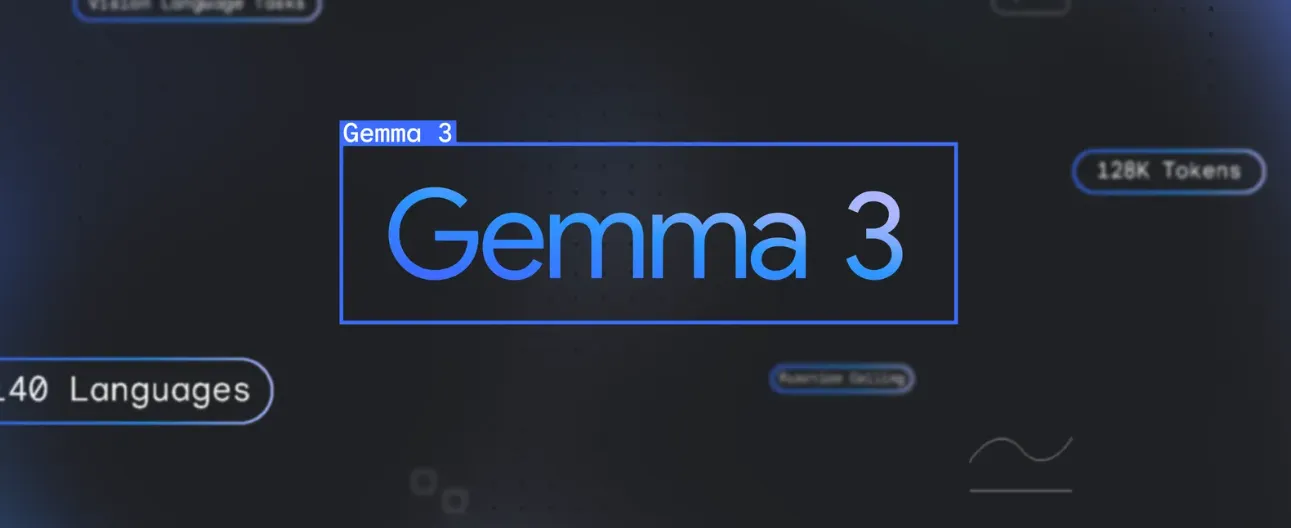
Google Unveils Gemma 3: A New Benchmark for AI Accessibility
Google launches Gemma 3, a collection of open models the tech giant claims are its most advanced, portable, and “responsibly developed” open model yet. Read more here today!
Ready to create talking videos that hold attention?
Start with a script, pick a puppet, and share a finished video in minutes. Free to try, no credit card required.